

Being arrested in Knoxville is overwhelming. You’re taken to the Knox County Detention Facility and then face two key questions: How do I get out of jail? And how soon can it happen? This comprehensive guide explains how bail and bond work in Knox County, why local legal representation matters, and how a Knoxville criminal defense attorney can accelerate your release and protect your rights.
Knoxville Bail and Bond OverviewUnderstanding how bail and bond work in Knox County can significantly affect how quickly someone is released after an arrest. Bail decisions depend on factors such as the charges, criminal history, flight risk, and public safety. Skilled legal representation can seek bond reductions, request release on recognizance, and present mitigating evidence during bond hearings. Knowing bond conditions, payment options, and common misconceptions helps defendants protect their rights while improving their chances of a faster, more affordable release. |
What is Bail vs. Bond?
Bail is the amount set by a judge to release someone from jail while their case moves forward. Bond is the mechanism (usually through a bail bondsman or attorney motion) that allows you to pay less than full bail to be released. In some situations, attorneys can help negotiate release without posting money, known as release on recognizance if the judge agrees.
However, courts may also release eligible defendants without requiring cash bail. According to the U.S. Department of Justice, Pretrial Release and Misconduct in Federal District Courts, Fiscal Years 2011–2018, 76% of federally released defendants were released without financial conditions, including release on personal recognizance or an unsecured bond.
How Bail is Set in Knox County
In Knoxville and Knox County courts, bail is based on:
- Severity of the charge
- Prior criminal history
- Flight risk
- Public safety concerns
Judges set bail amounts at initial hearings. Higher dockets or felony charges typically mean higher bail — sometimes thousands of dollars.
Why You Need a Criminal Defense Attorney at Your Bond Hearing
Many people think bail is fixed, but an experienced defense lawyer can:
- File bond reduction motions
- Argue for personal recognizance release
- Present mitigating factors early
Because local attorneys know judge preferences and prosecutor tendencies, they often secure release faster and for less money.
Speak With a Knoxville Criminal Defense Attorney |
What Happens at a Bond Hearing
A bond hearing is your chance to:
- Ask the court to reduce bail
- Show community ties
- Present character evidence
- Explain why you’re not a danger or flight risk
Your criminal defense attorney prepares evidence, communicates with the prosecutor, and speaks directly with the judge, giving you a much better chance of receiving reasonable bail or temporary release.
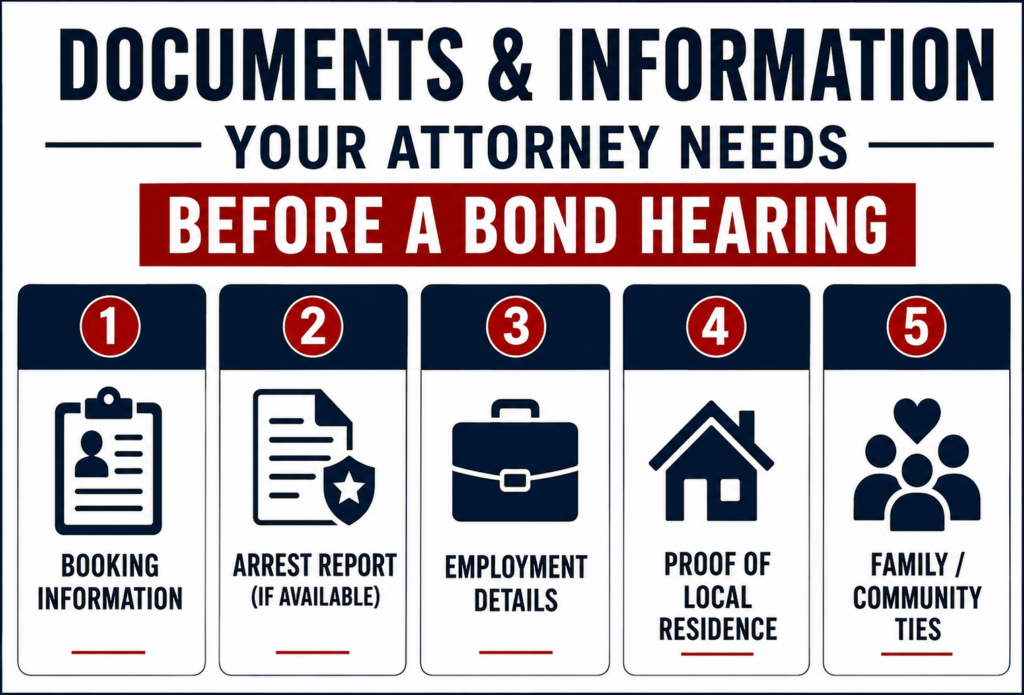
Documents and Information Your Attorney Needs Before a Bond Hearing
Preparing for a bond hearing begins with gathering the right information. The documents you provide help your criminal defense attorney present a clearer picture of your background, demonstrate your ties to the Knoxville community, and support arguments for a lower bond or release on recognizance when appropriate. While every case is different, having key records readily available can streamline your attorney’s preparation and strengthen your position before the judge.
Bond Conditions & What They Mean
Once released on bond, conditions may include:
- No alcohol or drug use
- GPS monitoring
- Curfews
- No contact with certain people
Violating these conditions can result in re-arrest. A defense attorney helps you understand and comply with every condition.
Cash vs. Bail Bonds: Pros & Cons
In Knox County, defendants may satisfy bond requirements through licensed bonding companies, cash payments, or other court-approved methods, depending on the type of bond ordered. The court provides guidance on Knox County bond payment options, including payment locations and applicable bonding fees.
Cash Bail:
- Full amount paid to the court
- Returned at case end (minus fees)
Bond through a Bail Bondsman:
- Usually 10% fee
- Bondsman posts bail for you
Attorney-Assisted Motions:
- Avoids large cash payments
- Often reduces overall cost
Common Misconceptions About Bail
Myth: You must stay in jail until trial.
Reality: You can often secure release quickly with the right motions and representation.
Myth: Bail amounts are non-negotiable.
Reality: Lawyers frequently get bail reduced, especially for first-time offenders or non-violent charges.
How the Watson Law Firm Can Help
At The Watson Law Firm, we:
- File early bond motions in Knoxville courts
- Use local insight to negotiate with prosecutors
- Prepare compelling arguments for judges
- Keep families informed throughout the process
Facing bail in Knox County? Call The Watson Law Firm at 865-259-0948 for immediate support.
Conclusion
Understanding bail and bond can save you money, reduce jail time, and set the best tone for your criminal case. At The Watson Law Firm, our attorneys move quickly to evaluate your case, file early bond motions, advocate for bond reductions or release on recognizance when appropriate, and provide dedicated representation throughout the Knox County legal process. With extensive experience in Knoxville courts and direct attorney involvement from the start, we work to help you secure a faster release while building a strong defense to protect your rights, freedom, and future.
Request Your Free Criminal Defense Consultation |
Frequently Asked Questions About Knoxville County Bail & Bond
How soon after arrest is bail set in Knox County?
Bail is typically set during your first court appearance, which generally takes place within 24 to 48 hours following an arrest.
Can my bail be waived?
Yes. A judge may grant release on recognizance if you are considered a low flight risk and meet eligibility requirements.
What if I can’t afford a bondsman?
Your criminal defense attorney can request a bond reduction or seek release on recognizance, depending on your circumstances and eligibility.
Can my family communicate with my attorney on my behalf?
Yes. Family members can often provide important information, discuss legal options, and help coordinate documents while you remain in custody.
Can a criminal defense attorney represent me even if formal charges change later?
Yes. Your attorney continues protecting your rights and adjusts your defense strategy as your case develops through the legal process.