

What Drivers in Knoxville & Across Tennessee Need to Know
As of January 1, 2026, new DUI laws took effect in Tennessee that could significantly impact drivers charged with impaired driving offenses. According to the Tennessee General Assembly’s statutory guidelines under T.C.A. § 55-10-401, these changes expand law enforcement’s authority in certain DUI investigations, introduce additional testing methods, and strengthen penalties for refusing chemical tests, making it more important than ever to understand your rights.
In this blog, we’ll discuss the key changes to Tennessee’s new DUI laws and what they mean for drivers in Knoxville and across the state.
Tennessee DUI Law Changes at a GlanceTennessee’s January 2026 DUI law updates introduce expanded roadside testing procedures, revised implied consent provisions, and stricter consequences for refusing chemical tests. Increased enforcement efforts and new reporting requirements also reflect the state’s evolving approach to impaired driving investigations. These procedural changes can influence evidence, legal strategy, and potential penalties, making it essential for drivers to understand their rights and seek experienced legal guidance when facing a DUI charge. |
Police Can Now Use Saliva Tests for DUI Investigations
One of the most talked-about changes in the 2026 DUI law allows law enforcement officers to collect saliva samples using a roadside swab from suspected impaired drivers.
Previously, officers could rely mainly on breath or blood tests. The new saliva testing option gives law enforcement an additional method to help identify potential impairment during a DUI investigation.
While saliva swabs may help officers establish probable cause, drivers still have important legal rights throughout the testing process, making it essential to understand how this evidence may affect a DUI defense strategy.
“Reasonable Force” May Be Used to Get a Blood Sample
Under the updated DUI laws, law enforcement may use reasonable force to obtain a blood sample when an individual refuses a lawful request for chemical testing.
This change reinforces Tennessee’s implied consent law which holds that by driving in the state, you’ve implicitly agreed to submit to chemical testing if lawfully requested following a DUI investigation.
A refusal to comply can result in additional penalties, including administrative driver’s license suspensions overseen by the Tennessee Department of Safety & Homeland Security Driver Services Division.
Refusing a Chemical Test Carries Stricter Consequences
The consequences for refusing a chemical test under Tennessee’s implied consent law have become more severe. Specifically first-time refusal may result in longer driver’s license suspensions, even if a sample is ultimately obtained through other lawful means. These changes make refusing a chemical test a more serious decision, with significant consequences for your driving privileges and DUI case.
| Facing a DUI charge in Tennessee? Discover how our Knoxville DUI lawyers build strategic defenses for every stage of your case. Explore Our DUI Defense Services |
Law Enforcement Is Increasing DUI Enforcement Ahead of 2026
Law enforcement agencies across Tennessee, including the Tennessee Highway Patrol and local police in cities such as Knoxville, are stepping up DUI patrols around holidays like New Year’s Eve. Statewide traffic safety initiatives supported by the Tennessee Highway Safety Office (THSO) aim to target key periods when impaired driving crashes have historically been more common.
This heightened enforcement throughout the year means more traffic stops, more chemical tests, and potentially more DUI charges for drivers who may not fully understand the new DUI laws.
Tennessee Is Tracking DUI Arrests With No Detectable Intoxicants
To improve transparency, a new law now requires state agencies like the Tennessee Bureau of Investigation (TBI) CJIS Division to track and report DUI arrests where laboratory tests later reveal zero alcohol or drugs in the driver’s system. Because drivers can sometimes be arrested based on misleading roadside tests, this annual reporting ensures greater accountability for law enforcement agencies and provides valuable data that attorneys can use to defend against improper DUI charges.
Impacts on DUI Penalties and Legal Strategy
While many portions of Tennessee’s DUI code remain the same, including the baseline blood alcohol concentration (BAC) limit of 0.08%, these new procedural rules can affect:
- Whether evidence is admissible
- How probable cause is established
- The defense strategy available if you are charged
- The penalties you may face following a DUI arrest
What This Means for Drivers in Knoxville & East Tennessee
If you are pulled over on suspicion of DUI in Tennessee in 2026:
- Expect law enforcement to use expanded testing methods, including saliva and blood testing where permitted by law
- Refusing a chemical test can lead to longer suspensions and additional legal consequences
- You could still face DUI charges even if chemical test results are disputed or become part of your legal defense
Because of these changes, having an experienced DUI defense attorney in Knoxville who understands Tennessee’s evolving DUI laws can help you better protect your rights and evaluate your legal options.
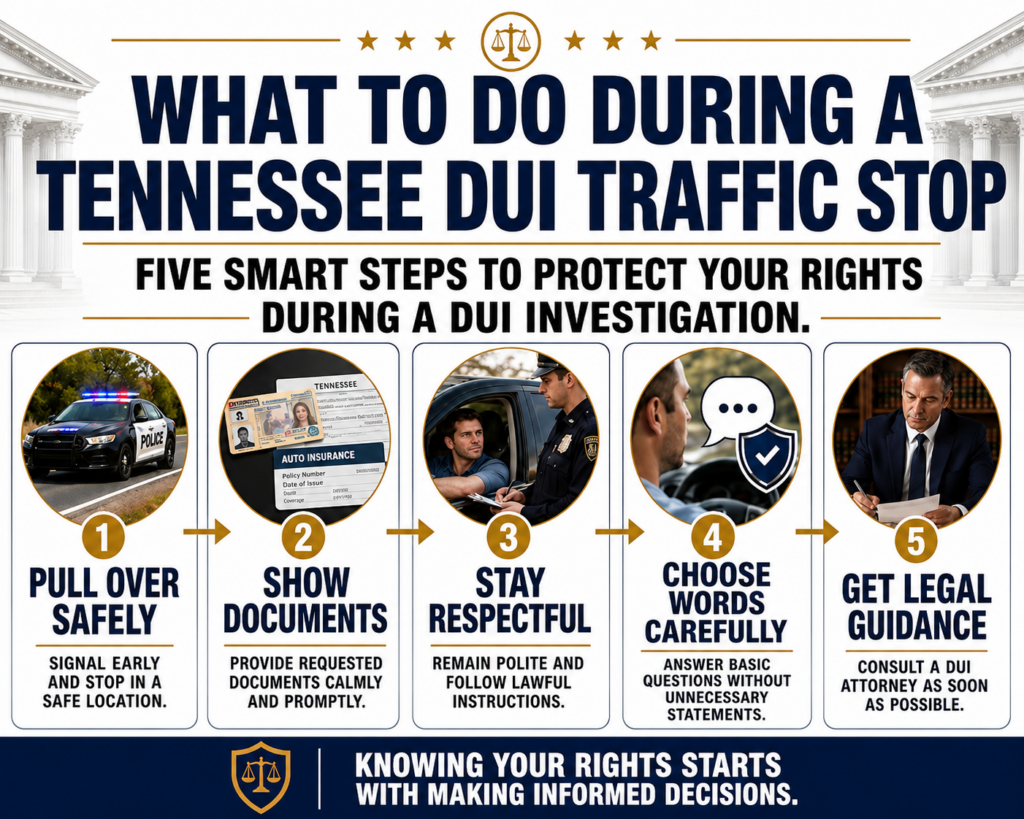
What to Do During a Tennessee DUI Traffic Stop
This infographic provides a clear, step-by-step visual guide to navigating a DUI traffic stop in Tennessee safely and effectively. It outlines essential actions from pulling over safely and presenting required documentation to maintaining composure, exercising your right to choose your words carefully, and securing legal representation. Designed for quick comprehension, these crucial steps help drivers protect their constitutional rights and preserve their legal defense options during an investigation.
Why Early Legal Help Matters
DUI charges in Tennessee carry not only potential criminal penalties but also long-term consequences, which may include:
- Driver’s license suspension or restriction
- Increased insurance rates
- Employment impacts
- Possible ignition interlock device requirements
- Future background check issues
With changes to DUI testing and enforcement underway, the decisions made during and immediately after a traffic stop or arrest can play a major role in how your case unfolds.
Your Next Steps After a Tennessee DUI Arrest
When DUI laws change, so do the challenges of defending against a charge. Having the right legal team can make all the difference in understanding your options and protecting your future. The Watson Law Firm is committed to providing knowledgeable, responsive DUI defense for drivers across Knoxville and East Tennessee.
| Protect your license, your record, and your future with experienced DUI defense tailored to Tennessee’s updated laws. Contact us and Protect Your Rights Today |
Frequently Asked Questions About Tennessee DUI Laws
Can a DUI affect my ability to travel internationally?
Yes. Some countries may restrict entry for individuals with certain criminal convictions, including DUI offenses. Entry requirements vary depending on the destination.
Does a Tennessee DUI increase car insurance rates?
Yes. A DUI conviction often results in significantly higher insurance premiums, and some insurers may choose not to renew your policy.
Can a DUI impact child custody proeedings?
Potentially. Family courts may consider a DUI conviction alongside other factors when evaluating a parent’s ability to provide a safe environment for a child.
Can employers see a DUI conviction during a background check?
Yes. Many employers conduct criminal background checks, and a DUI conviction may appear depending on the screening process and applicable reporting laws.
Can dashcam or surveillance footage help defend a DUI case?
Yes. Video footage may help clarify the events leading to a traffic stop or arrest and could become valuable evidence, depending on the circumstances.