
The legal world can be complex and intimidating. Terms like “indictment” often leave people confused and anxious. But what does an indictment mean? In simple terms, an indictment is a formal accusation of a serious crime. It’s a critical step in the criminal justice process, but it’s often misunderstood. This guide aims to demystify the concept of an indictment. We’ll explore its definition, the process involved, and its implications in the criminal justice system. Whether you’re a law student, facing criminal charges, or simply curious, this comprehensive guide will help you understand indictments better. And for those seeking legal advice in Knoxville, TN, we’ll also touch on how criminal lawyers can assist in such situations. Let’s dive in.
Indictment Process OverviewAn indictment is a formal accusation that allows a criminal case to move forward but does not determine guilt. The process typically involves an investigation, evidence review, grand jury evaluation, indictment issuance, and arraignment. Understanding the difference between being charged and indicted, the role of the grand jury, and the rights of the accused can help individuals navigate the legal system. Because indictments can have legal, financial, professional, and emotional consequences, experienced legal representation is often essential. |
What is an Indictment?
An indictment is a formal criminal accusation issued after a grand jury finds probable cause that a person may have committed a crime. An indictment is only an accusation and does not mean the accused person is guilty. An indictment is only an accusation and does not mean the accused person is guilty. Unlike charges filed through other procedures, an indictment involves a grand jury reviewing evidence presented by a prosecutor. The indictment document identifies the alleged offenses, provides details about the charges, and gives the accused notice of the allegations they must defend against. The requirements for indictments vary between federal and state courts. Federal felony prosecutions generally require a grand jury indictment under the Fifth Amendment of the U.S. Constitution, while states may use other methods, such as preliminary hearings or prosecutor-filed charging documents.
The Indictment Process Explained
The indictment process is a critical step in the criminal justice system. It serves as a mechanism to vet charges before proceeding to trial. Here’s an overview of how it typically unfolds:
- Investigation Initiation: Police collect evidence, talk to witnesses, and investigate the alleged crime.
- Evidence Reviews: Law enforcement collects evidence, and the prosecutor reviews the case to decide whether it should be presented to a grand jury.
- Grand Jury Deliberation: The grand jury reviews the evidence and decides if there is enough reason to issue an indictment.
- Indictment Issuance: If the grand jury approves the case, a formal indictment is issued, and the legal process continues.
- Arraignment: After indictment, the accused appears in court, receives the charges, and enters a plea.
Following these steps ensures a fair process for all parties involved. It also safeguards against arbitrary prosecutions. While the process can be overwhelming, it is designed to establish probable cause as a threshold for trials. This structure helps uphold justice by weighing evidence carefully before advancing to court.
At this stage, both the prosecution and defense begin preparing their legal strategies. This stage allows both prosecution and defense to prepare their respective cases. By understanding the process, defendants can better anticipate the legal journey ahead, aided by legal professionals familiar with this complex terrain.
The Role of the Grand Jury
The grand jury plays a pivotal role in determining whether to indict. Comprised of lay citizens, this jury listens to the prosecutor present evidence. These proceedings are conducted in secrecy to protect potential defendants and encourage candid testimony. A grand jury’s primary responsibility is to evaluate the evidence. They determine whether it justifies formal charges against an individual. This secretive nature helps protect innocent individuals from public stigma. Notably, the federal grand jury doesn’t decide guilt. Instead, it assesses probable cause for pursuing a trial. If the jury finds sufficient cause, they issue a “true bill,” leading to an indictment. Conversely, a “no bill” means they found insufficient evidence to proceed.
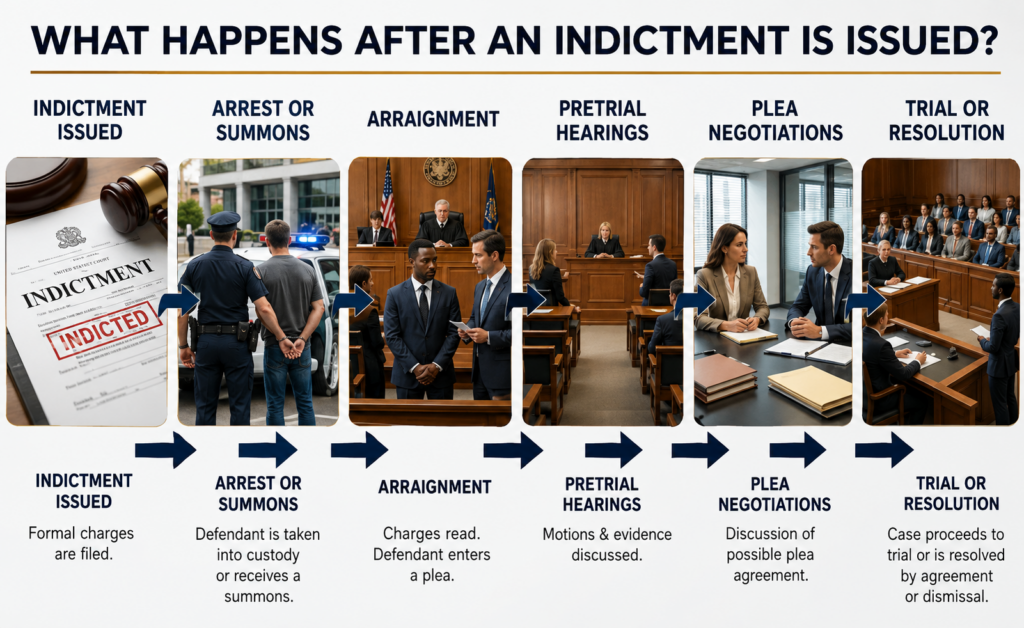
What Happens After an Indictment is Issued?
After an indictment is issued, the criminal case moves forward through several legal stages. Understanding these steps can help individuals know what to expect and prepare for the process ahead.
The Difference Between Being Charged and Indicted
Being charged and being indicted are different steps in the criminal justice process. These terms often cause confusion, but they hold distinct meanings. Understanding their differences can clarify the legal standing of an accused individual. A charge can be made directly by law enforcement or a prosecutor. It occurs when they believe there’s enough evidence to accuse someone of a crime. This step doesn’t involve a grand jury, and charges may be filed through different procedures depending on the jurisdiction and type of offense.
An indictment, however, is more formal. It necessitates a grand jury’s review of the evidence. Indictments are often used for serious offenses, ensuring that a citizen’s liberty isn’t compromised without judicial oversight. The grand jury’s involvement adds a layer of evaluation absent in simple charges. Therefore, while charges can emerge swiftly, indictments require deeper deliberation. Both lay the groundwork for a defendant to face trial, but the processes diverge significantly in formality and scrutiny. Understanding these distinctions helps navigate the complexities of the legal system.
Rights of the Accused During the Indictment Process
The indictment process can feel overwhelming, but the accused has specific rights. These rights ensure fairness and protect personal liberty throughout the legal proceedings. Firstly, individuals are presumed innocent until proven guilty. This presumption safeguards against hasty judgments and ensures a fair trial. It places the burden of proof on the prosecution. The accused also has the right to legal representation. Hiring a skilled attorney can aid in navigating complex legal challenges. Knowledgeable representation is crucial, especially when interpreting indictment specifics and preparing a defense strategy.
Moreover, the accused has the right to a speedy trial. This means the prosecution must proceed without unreasonable delay. Any undue postponements can be contested legally, emphasizing the importance of timely justice. Transparency in evidence collection and presentation is another fundamental right. The defendant has the right to receive evidence that may help their defense during the legal process.
How Criminal Lawyers in Knoxville, TN Can Help
Facing an indictment can be a daunting experience. Criminal lawyers in Knoxville, TN, provide essential support. They guide clients through every step of the legal process, which is complex and often stressful. Their role includes analyzing case details to identify possible defenses. With their expertise, they can spot flaws in the indictment or evidence. They ensure that the accused’s rights are fully protected throughout the proceedings.
Moreover, these lawyers are adept at negotiating plea deals when appropriate. By evaluating the strengths and weaknesses of a case, they can often achieve favorable outcomes. In some instances, this might mean reduced charges or lighter sentences. Criminal lawyers also help demystify legal jargon. They explain complex legal terms in plain language, making sure clients are well-informed. This understanding empowers clients to make the best decisions for their situation.
When your future is on the line, trusted criminal defense makes all the difference. Get experienced legal guidance for your case today!
| When your future is on the line, trusted criminal defense makes all the difference. Get experienced legal guidance for your case today! |
Finding the Right Representation
Selecting the right lawyer is crucial for a strong defense. Begin by researching attorneys with experience in criminal law. Look for specialists in indictments within the Knoxville area. Check their track records and client reviews. Positive feedback and successful outcomes are indicators of reliability. Consultations can help gauge an attorney’s approach and compatibility with your needs. Finally, consider their fee structure to ensure it aligns with your budget. Transparent pricing avoids unexpected costs. Make an informed choice to secure effective legal support.
Common Misconceptions About Indictments
Several misconceptions surround indictments. The most common is that an indictment means someone has been found guilty. In reality, an indictment is merely a formal accusation. Some believe indictments always lead to trials. However, cases often resolve before reaching court. Plea bargains and dismissals are potential outcomes. Another misconception is the belief that the accused can present a defense during indictment proceedings. Grand jury processes typically exclude input from the defense, focusing solely on the prosecutor’s evidence.
There’s also confusion between indictments and arrests. An arrest might occur without an indictment, as charges can be filed differently, such as through a preliminary hearing. Finally, people often overestimate the indictment’s impact on one’s legal record. An indictment itself is not a conviction. The accused remains innocent until proven guilty, and the trial phase determines the outcome. Understanding these nuances helps clarify the complexities of indictments.
The Impact of an Indictment on One’s Life
Facing an indictment can have practical consequences that extend beyond the courtroom. Professional opportunities may be affected by the EEOC guidance on arrest and conviction records, as some employers conduct background checks or hesitate to hire individuals involved in ongoing criminal cases. Financial challenges can also arise due to legal fees, court costs, and potential lost income from missed work.
An indictment may also affect a person’s reputation. Friends, colleagues, and members of the community may form opinions before the case is resolved. In some situations, an indictment can become part of the public record, which may create additional challenges even if the charges are later dismissed. Understanding these potential impacts can help individuals prepare for the legal process ahead.
Emotional and Psychological Effects
In addition to practical challenges, an indictment can take a significant emotional toll. Many individuals who experience stress, anxiety, and uncertainty are coping with stressful life events while navigating criminal proceedings. Concerns about the future, court appearances, and possible outcomes can create ongoing emotional pressure.
Family members and loved ones may also be affected. The legal process can place strain on relationships, create financial worries, and increase emotional tension within a household. Seeking support from trusted family members, friends, counselors, or mental health professionals can help individuals cope with the challenges that often accompany criminal charges.
Conclusion and Further Resources
Understanding an indictment is important because it marks the beginning of a formal criminal case, not a determination of guilt. Knowing your rights and the legal process can help you make informed decisions during a difficult time. If you or a loved one is facing an indictment, seeking legal guidance as soon as possible is essential. The Watson Law Firm provides experienced criminal defense representation in Knoxville, TN, helping clients understand their options and protect their rights throughout the legal process. Explore credible resources like legal aid websites or community legal services. Gaining more knowledge helps in navigating the complexities of the indictment process with confidence.
| Take the first step toward a stronger defense with a dedicated legal team committed to protecting your future at every stage! |
FAQ’s About Indictments
How long does an indictment stay active?
An indictment usually stays active until the case is finished. This may happen through a dismissal, plea deal, or court decision. The length of time depends on the details of the case.
Can new charges be added after an indictment?
Yes. If new information or evidence is discovered, prosecutors may add new charges or update existing ones. This depends on the facts of the case and legal procedures.
Can someone be indicted without being arrested first?
Yes. In some cases, a person may be indicted before being arrested. After that, they may be arrested or required to appear in court.
What happens after an indictment is issued?
After an indictment is issued, the person goes to court, hears the charges, enters a plea, and the legal process moves forward.
Does an indictment affect employment opportunities?
Yes. An indictment can make it harder to get or keep certain jobs, especially if employers conduct background checks while the case is ongoing.